 Log in to view
฿฿฿
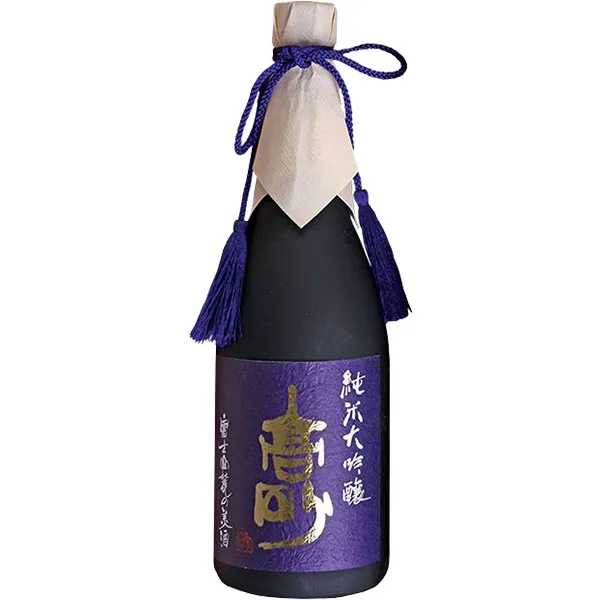
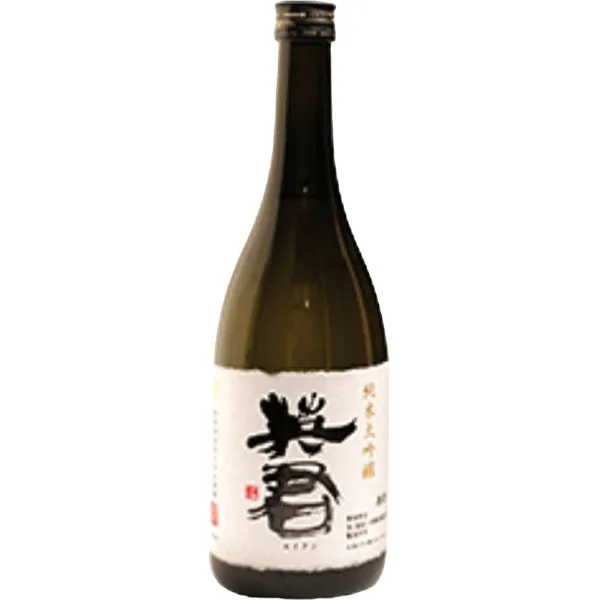
Junmai Daiginjo.
Product information compiled from producer, importer and reference sources.
Fushimi kura, 40% seimaibuai Iwai rice — Kyoto's hyper-regional variety Eikun controls in near-monopoly, shaped by ultra-soft Momoyama Hills spring water.
In 1915, Saito Shuzo adopted the name Eikun to mark Emperor Taisho's ascension — a deliberate act of positioning that signalled the house's ambition to brew sake worthy of Kyoto's imperial cultural weight. That ambition is now anchored in a single agronomic
fact: Eikun controls roughly 40% of all Iwai rice grown in Kyoto Prefecture, a variety developed in 1933, nearly lost, and revived in 1988, unavailable to any brewery outside the prefecture by convention and supply reality.
The Fushimi kura draws from Fusui, a low-iron, low-mineral soft-water spring beneath the Momoyama Hills — designated among Japan's top 100 water sources. Soft water produces a gentler, more soluble fermentation environment, yielding the mellow, yielding texture Fushimi brewers call onna-zake (feminine sake), in deliberate contrast to the harder, more assertive Nada style across the bay.
This Junmai Daiginjo is milled to a 40% seimaibuai — 60% of each Iwai grain removed — then cold-fermented using Kyoto-sourced yeast under the supervision of a Nanbu Toji guild brewmaster via traditional sandan jikomi (three-stage addition). No distilled alcohol is added.
The result is a structurally pure expression of Iwai's naturally low-protein, high-starch character: white peach skin, rice-cream, and a faint anise-like floral lift that Yamada Nishiki alone cannot produce. Drink now through three years from bottling, lightly chilled at 10–12°C.
Sommelier’s pick: Kyoto-style yudofu with kombu dashi · Sashimi of hirame (flounder) with yuzu kosho · Steamed abalone with sake-butter sauce
Loading notes…
Tasted this?
Ask us on LINE.
Ask about this item