 Log in to view
฿฿
Product information compiled from producer, importer and reference sources.
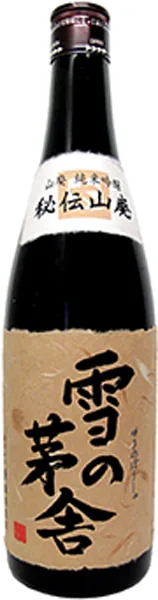
Yamahai Junmai Ginjo from Akita's gravity-fed 'Nobori-gura' — genshu, unfiltered, no stirring, no charcoal, no dilution.
Toji Takahashi Toichi — honoured by the Emperor of Japan in 2015 as a national artisan — built his yamahai method around deliberate restraint: a low-temperature yamahai moto starter that coaxes natural lactic-acid development slowly enough to stay clean, sidestepping the funky, oxidative edge that makes most yamahai polarising.
The result is a yamahai that reads as precise rather than rustic. The kura itself sits on a natural 6-metre slope in Yurihonjo City, Akita — the Nobori-gura (climbing brewery) — where rice polishing begins at the hilltop and gravity carries the sake downward through fermentation and pressing, eliminating mechanical pumping stress at every stage.
Brewing water is drawn from a mineral-rich underground spring fed by Mount Chokai, whose snowmelt delivers the soft, clean mineral backbone characteristic of Tohoku's finest sake. The rice is Akita Sake Komachi polished to 55% remaining (ginjo grade), more than half of it grown by brewery employees themselves — an end-to-end paddy-to-bottle control almost unheard of at this level.
Fermentation follows the house's San-nai-zukuri philosophy: no paddle-stirring, no charcoal filtration, no water addition, bottled as genshu at 15.7% ABV. What is unusual here is the combination of yamahai complexity with genshu purity and ginjo delicacy — three forces that typically pull against each other, unified by Takahashi's cold, slow fermentation.
Drink now through three to five years; the undiluted structure will reward short cellaring.
Sommelier’s pick: Grilled Akita kiritanpo skewers with miso tare · Seared scallop with yuzu beurre blanc · Aged Comté with walnut honey
Loading notes…
Tasted this?
Ask us on LINE.
Ask about this item