 Log in to view
฿฿
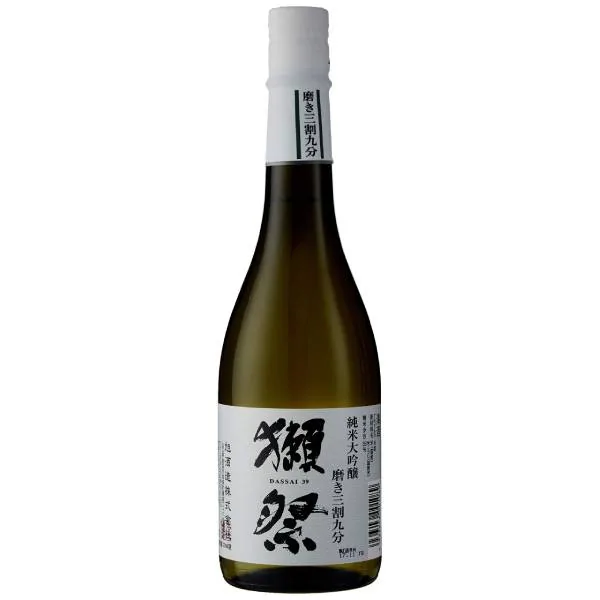
Junmai Daiginjo.
Product information compiled from producer, importer and reference sources.
Yamada Nishiki polished to 39% seimaibuai; centrifuge-pressed without pressure in Iwakuni's soft mountain water country, Yamaguchi.
When Hiroshi Sakurai launched the Dassai brand in 1990, he made a commitment that remains almost without parallel in Japanese brewing: every single expression in the range would be Junmai Daiginjo — no lower grades, no blended tiers, no seasonal shortcuts. The 39 sits at the productive heart of that commitment.
The brewery occupies a mountain valley in Shuto-cho, Iwakuni City, Yamaguchi Prefecture, where the regional water is classified Seiryu — very soft, low-mineral clear-stream water, purified further on-site. Soft water produces a gentler, more delicate fermentation character, amplifying the aromatic lift that 61% milling of Yamada Nishiki — the most prized sake rice variety — makes possible at this seimaibuai.
Rice is washed in 10 kg batches in running water and soaked approximately 15 minutes; koji is applied entirely by hand. Two parallel brewing teams run simultaneous fermentations at differing water-absorption rates and temperatures, comparing results batch by batch — a data-driven artisan discipline that replaces the traditional single toji system with permanent year-round staff.
Pressing uses a centrifuge pioneered commercially by Dassai, separating sake from mash without applied pressure to preserve the most volatile aromatic compounds intact. Pasteurization follows the patented Hayata method: bottled cold below 5°C, hot-shower pasteurized, then immediately rapid-cooled.
The special feature here is structural: pressure-free centrifuge separation at 39% seimaibuai produces a textural silkiness and aromatic precision that conventional fune or yabuta pressing at this polish level simply cannot replicate.
Brewed year-round rather than seasonally, the 39 is intended for near-term consumption; no vintage dating applies.
Sommelier’s pick: Steamed Dungeness crab with yuzu kosho butter · Sashimi of hirame (flounder) with sudachi and fleur de sel · Chawanmushi with Kyoto white miso and shimeji
Loading notes…
Tasted this?
Ask us on LINE.
Ask about this item